
The Algorithm Fatigue No One Warned You About
The Algorithm Fatigue No One Warned You About
Nobody warns creators, when they post their first photo, that within a year or two they might be spending close to a full part-time job's worth of hours a week just to stay visible. But that's roughly where the numbers have landed. A 2026 report from ManyChat surveying over 2,000 creators and daily social media users found that creators now spend nearly 20 hours a week planning, filming, and editing content – before counting the time spent answering comments and DMs. That's most of a traditional part-time workweek, spent on something that, for most people, started as a hobby or a side project.
The consequence of that workload is showing up in how creators talk about quitting.
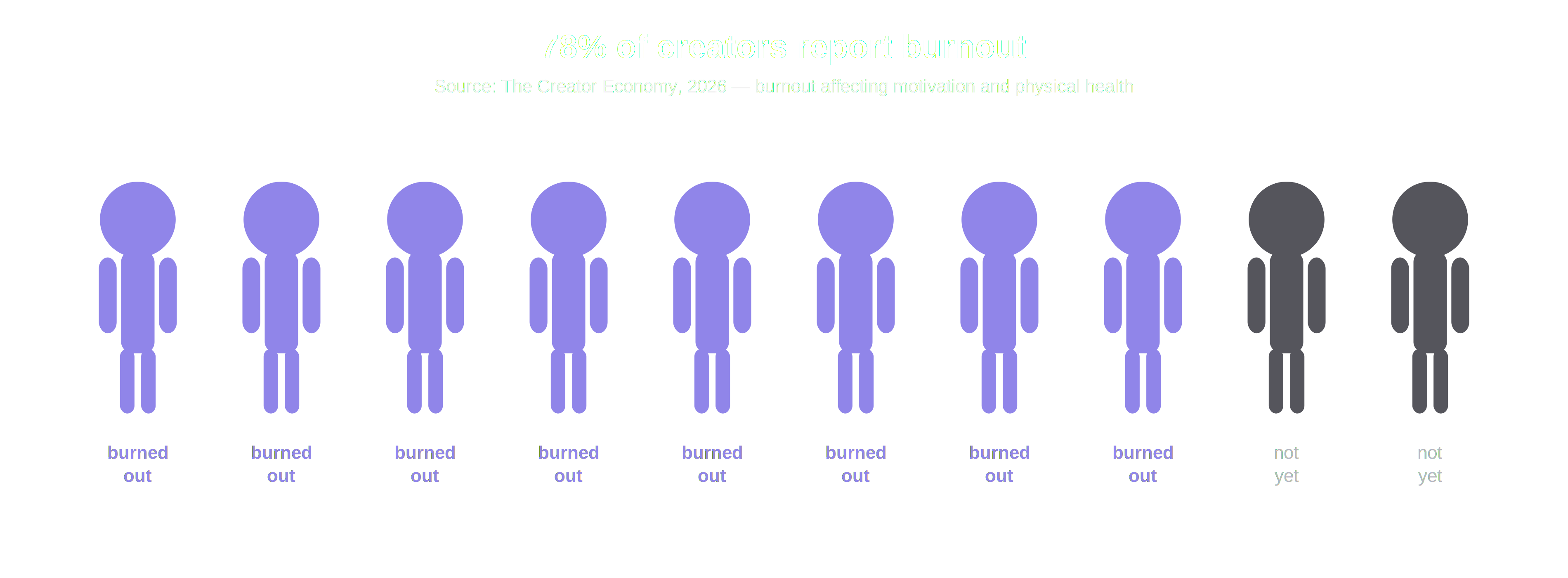
In the same report, 51% of creators said they'd seriously considered walking away from content creation in the past year. Among Gen Z creators – the group platforms increasingly depend on – that number rises to 55%. A separate 2026 industry survey put the broader burnout figure at 78% of creators reporting that the pace of content creation was affecting their motivation and their physical health.
This isn't a story about people who chose the wrong career. It's a story about what happens when a format designed to reward constant output meets a human being who, like anyone, has a finite amount of attention and creative energy in a day.
Where This Data Comes From
It's worth pausing on the source before going further, because numbers about burnout circulate widely and not all of them hold up to scrutiny. The ManyChat figures come from a survey of 2,028 people globally – 1,000 self-identified content creators and 1,028 daily social media consumers – run at a 95% confidence level with roughly a 2% margin of error, and broken down by follower tier from people just starting out to established creators. The 78% burnout figure comes from a separate, smaller industry survey reported by The Creator Economy. Neither number is a perfect census of every creator alive, and both should be read as directional rather than exact – but the direction they point in is consistent, and it lines up with what platform-side researchers and creator-support communities have been describing anecdotally for several years now.
Content Creation Became a Second Job
The economics make the exhaustion harder to justify, not easier.
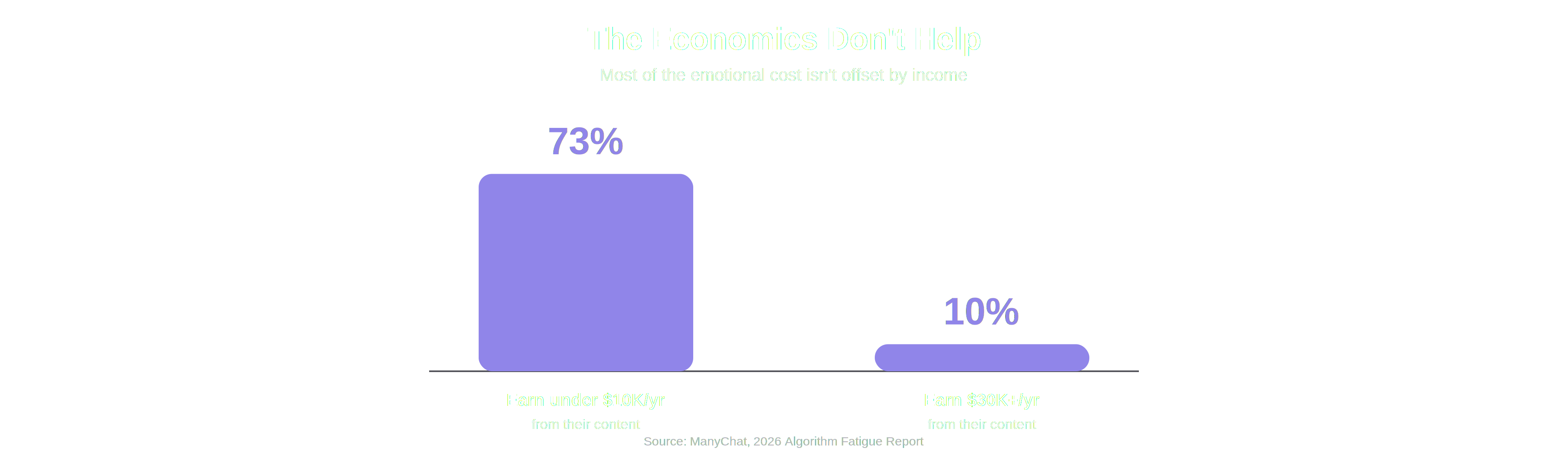
The same ManyChat data found that 73% of creators earn under $10,000 a year from their content, and only about 10% cross $30,000. Most of the emotional and time cost of running an account isn't offset by the kind of income that would make the hours feel like a fair trade. People keep going anyway, because an audience – even a small one – creates a sense of obligation that's hard to walk away from, and because stopping can feel like erasing something they built.
What's striking in these surveys isn't just the hours logged. It's what creators say those hours are actually spent on. Filming a video or taking a photo is rarely the part people describe as draining. It's everything around it – figuring out what to post, second-guessing whether an idea is good enough, watching engagement numbers as a referendum on whether the last week of effort meant anything, and starting that whole cycle over the next morning with no clear signal about what worked and why.
It's Not the Filming, It's the Deciding
This distinction matters more than it might seem. Decision fatigue is a well-documented phenomenon: the quality of a person's decisions degrades the more decisions they've already made in a day, regardless of how important any single one is. Content creation, as most people experience it, is an unusually dense stream of small decisions – what to post, when, in what format, with what caption, responding to what trend, informed by which piece of half-remembered analytics. None of these decisions is individually hard. Making dozens of them, every day, indefinitely, is where the fatigue actually accumulates.
Most tools built for creators address the execution side of this problem – a faster editor, a better filter, a one-tap effect. Those tools are genuinely useful, and they do shorten the time any single task takes. What they don't touch is the layer underneath: the constant, low-grade cognitive load of having to personally decide everything, every time, with no one else holding any part of the plan.
The Physiology Underneath the Exhaustion
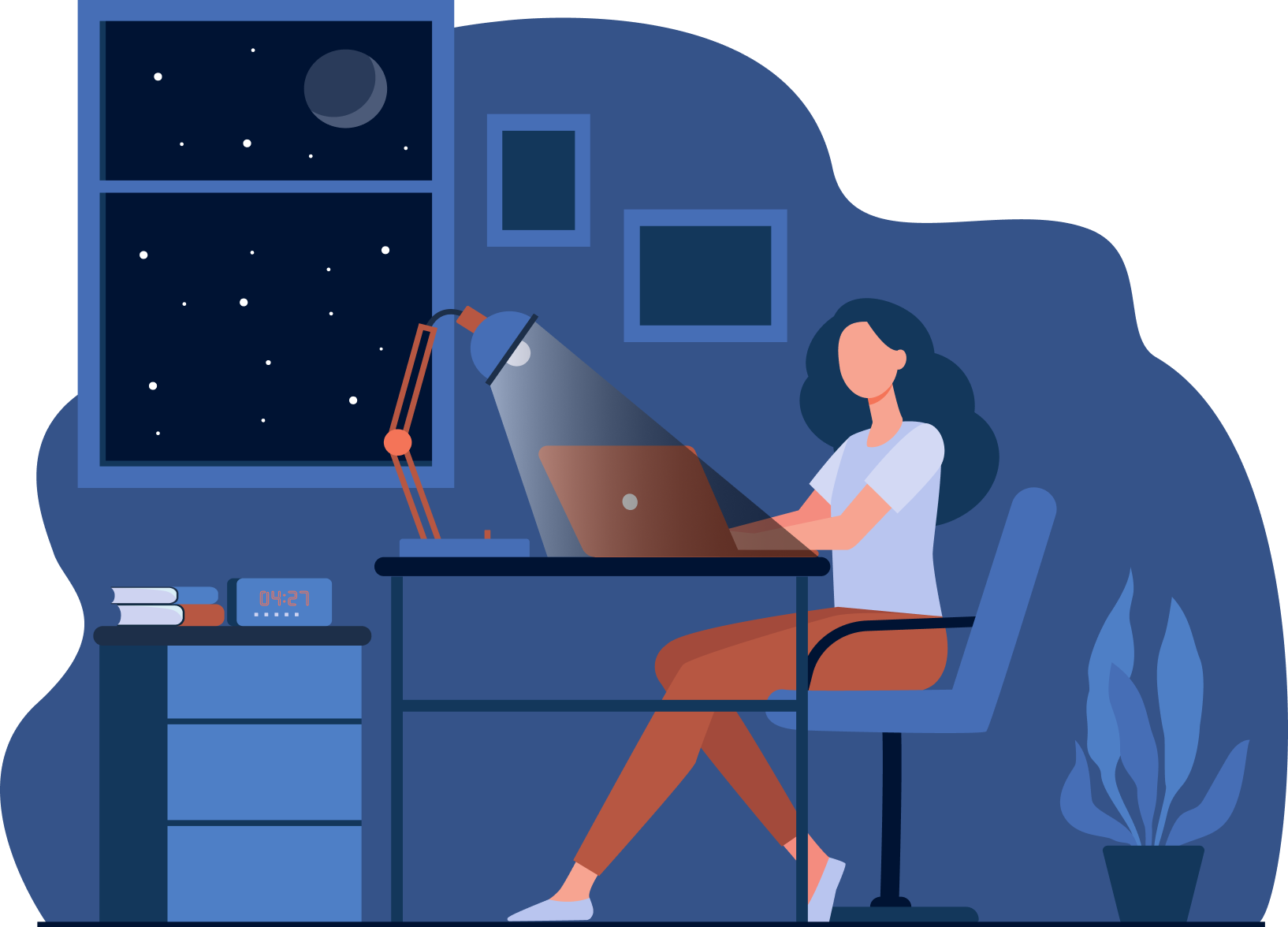
Decision fatigue isn't just a figure of speech – it describes something closer to a depleting resource than a mood. Each decision, however small, draws on the same limited pool of mental energy, and that pool doesn't refill over the course of a single day the way it does overnight. This is part of why the same person can plan a sharp, well-considered post at nine in the morning and, by nine at night, either post something they'll regret or not post anything at all. It isn't a failure of discipline. It's what happens when a finite resource gets spent on dozens of small, unremarkable choices before it's asked to produce one good one.
Social platforms compound this by design, not by accident. Feeds are built to reward novelty and immediacy, which means the "right" answer to what to post next is often a moving target that resets before a creator has fully recovered from the last posting cycle. A plan that made sense on Monday can feel out of step by Thursday, and reacting to that shift is itself another decision, layered on top of all the others.
What Doesn't Actually Help
It's tempting to treat this as a problem that faster tools will eventually solve – if editing takes ten seconds instead of ten minutes, surely the exhaustion goes away. The data doesn't support that shortcut. Editing speed addresses execution time, not decision load, and the two are only loosely related. A creator who can produce a finished photo in seconds still has to decide what that photo should be, why it matters this week, and whether it fits a plan that makes sense beyond a single post – and doing that thinking alone, from scratch, at the same frequency the platforms demand, is the part the numbers above are actually describing.
This is also why simply posting less, on its own, isn't a complete answer either. Stepping back can genuinely help an individual creator in the short term, but it doesn't change the underlying structure that produced the exhaustion in the first place: a format that asks one person to be their own analyst, strategist, writer, and editor, every day, with no one else holding any part of that chain.

Where a Different Kind of Support Fits In
This is the gap Muza's content team was built to sit inside – not to replace the parts of content creation people actually enjoy, but to absorb the parts that are pure decision fatigue and very little creativity. Reading what a profile's numbers are actually saying, working out a direction worth pursuing, filling that direction with concrete ideas week over week, turning ideas into finished drafts, and checking that everything still holds together – each of those is a place where a creator currently has to stop, think, and decide alone, often at the end of a day when there's the least mental energy left to do it well.
Taking even a portion of that decision load off a single person doesn't make content creation effortless. It changes what the remaining effort is spent on – less time deciding whether an idea is good enough to bother with, more time actually making the thing once a direction already exists.
A Quieter Way to Keep Showing Up
None of this is an argument that people should post more, or post better, or post with less friction so that the same treadmill simply runs faster. The numbers above suggest the opposite conclusion is worth taking seriously: a format that currently costs creators 20 hours a week and drives more than half of them to consider quitting within a year is not sustainable simply because more tools get built to speed up the filming and editing part of it.
What might actually help is fewer of those hours spent alone, deciding everything from a blank page – and more of that time spent on the parts of the work that made someone want to start posting in the first place.